SHOULD YOU CHANGE TRANSMISSION FLUID ON A HIGH-MILEAGE VEHICLE?
Should You Change the Transmission Fluid on a High-Mileage Vehicle?
One of the most common questions we hear about transmission maintenance is:
“My vehicle has a lot of miles on it. Is it still safe to change the transmission fluid?”
You may have heard that changing transmission fluid on a high-mileage vehicle can cause the transmission to fail. You may have even been told that once a vehicle reaches a certain mileage, you're better off leaving the old fluid alone.
The real answer is more complicated.
Changing transmission fluid does not create worn clutches, damaged bearings, failing seals, or other internal damage. However, if a transmission already has significant wear, contamination, deposits, or internal problems, servicing the fluid cannot undo those conditions—and in some cases, changing severely neglected fluid can make an existing problem more noticeable.
That's why mileage alone isn't enough to determine whether a transmission should be serviced.
Why Transmission Fluid Matters
Automatic transmission fluid does much more than simply lubricate the transmission. Depending on the transmission design, the fluid helps:
- Lubricate internal components
- Control heat
- Provide hydraulic pressure
- Apply clutches and other components
- Protect against wear and corrosion
- Carry contaminants to the filter
- Maintain proper friction characteristics and transmission operation
Over time, heat and normal operation affect the fluid and its additives. The fluid can also accumulate material from normal internal wear.
That's why manufacturers specify particular transmission fluids and may recommend service or inspection procedures for their transmissions.
But what happens when a vehicle has 100,000, 150,000, or even 200,000 miles and you don't know whether the transmission has ever been serviced?
That's where the decision requires a little more thought.
Does New Transmission Fluid Cause Old Transmissions to Fail?
New fluid does not create the wear that causes a transmission to fail.
Worn clutch material, excessive internal clearances, failing seals, hydraulic leakage, damaged bearings, and other internal problems develop over time.
The concern is servicing a transmission that already has one or more of those conditions.
For example, a high-mileage transmission may already have worn clutches, excessive internal leakage, contaminated fluid, or other signs of deterioration. If the transmission is already slipping, shifting poorly, or showing evidence of an internal problem, replacing the fluid should not be viewed as a repair for those conditions.
Sometimes a transmission problem becomes noticeable shortly after a fluid service because the transmission was already near the point where symptoms were going to appear.
That doesn't necessarily mean the new fluid created the failure.
What About Varnish and Deposits?
There is another legitimate concern when servicing a transmission that has gone a very long time without maintenance: varnish and other deposits inside the transmission.
As transmission fluid ages and is repeatedly exposed to heat, the fluid can degrade and contribute to varnish, sludge, and other deposits.
Fresh automatic transmission fluid contains a renewed additive package, including detergents and dispersants designed to help control deposits and keep contaminants suspended.
In a severely neglected transmission, introducing fresh fluid may loosen some accumulated deposits.
That matters because an automatic transmission contains a complex hydraulic system. The valve body contains valves, passages, and electronically controlled solenoids that depend on precise fluid flow and pressure.
If loosened material begins circulating through that system, it can potentially interfere with valve or solenoid operation and contribute to hydraulic problems.
Removing accumulated deposits may also make existing leakage or wear more apparent.
This doesn't mean fresh transmission fluid is harmful.
It means there's a significant difference between servicing a transmission that has been properly maintained throughout its life and servicing one that has operated for many years with severely degraded fluid and accumulated deposits.
That's one reason we consider the transmission's condition and maintenance history before recommending service on a high-mileage vehicle.
Is the Old Fluid Keeping the Transmission From Slipping?
Another common belief is that an old transmission may actually need the dirty fluid—or the clutch material suspended in it—to keep from slipping.
There is some truth behind the observation that a severely worn transmission may operate differently after its fluid is changed, but the explanation is often misunderstood.
A properly operating transmission doesn't depend on contaminated fluid to keep its clutches applied. The clutches are designed to hold through the combination of hydraulic pressure, clutch friction material, and the correct fluid characteristics.
Old transmission fluid can contain suspended clutch material and other wear debris, and severely degraded fluid may behave differently from fresh fluid.
But leaving contaminated fluid in a transmission is not a repair for worn internal components.
If a transmission has enough internal wear that its operation changes significantly after replacing severely contaminated fluid, the underlying wear was already present before the service.
The goal should be to identify the condition of the transmission rather than assume that dirty fluid is what's keeping it alive.
Mileage Isn't the Only Thing We Consider
There isn't a specific mileage where transmission fluid suddenly becomes “too old to change.”
A vehicle with 150,000 highway miles and a documented maintenance history can be very different from a vehicle with 80,000 miles that has spent its life towing heavy loads.
When deciding whether transmission service is appropriate, we may consider:
- Vehicle mileage
- Manufacturer service recommendations
- Previous transmission maintenance
- Fluid level and condition
- Transmission operation
- Diagnostic trouble codes
- Evidence of leaks
- Towing or heavy-use history
- Known concerns for that particular transmission
The transmission's current condition and history matter more than simply looking at the odometer.
What If the Transmission Fluid Is Dark?
Dark transmission fluid does not automatically mean the transmission has failed.
Transmission fluid changes appearance as it ages, and different fluids can look very different depending on their formulation, mileage, operating temperature, and use.
Some fluids naturally become much darker during normal service.
That's why we don't diagnose a transmission based on fluid color alone.
Fluid condition is one piece of information. We may also consider:
- How the transmission operates
- Fluid odor
- Evidence of metal or excessive clutch material
- Diagnostic trouble codes
- Leaks
- Maintenance history
- Manufacturer service information
A transmission pan containing excessive clutch material or metal debris tells us much more than simply seeing fluid that isn't bright red anymore.
What Does “Lifetime Transmission Fluid” Mean?
Some modern vehicles are described as having “lifetime” transmission fluid, or they may not list a traditional transmission service interval under normal driving conditions.
That doesn't mean the fluid is immune to heat, oxidation, contamination, or normal wear.
Service recommendations can also vary depending on how the vehicle is used. Towing, carrying heavy loads, frequent stop-and-go driving, temperature, and other severe operating conditions can affect maintenance requirements.
Rather than assuming every transmission described as “sealed” or “lifetime fill” should never be serviced, we recommend looking at the service information for the specific vehicle and considering how that vehicle is actually used.
Can a Sealed Transmission Still Be Serviced?
In many cases, yes.
The fact that a transmission doesn't have a traditional dipstick doesn't necessarily mean the fluid can't be checked or serviced.
Many modern transmissions require a specific procedure to establish the correct fluid level. That procedure may require:
- Keeping the vehicle level
- Monitoring transmission fluid temperature
- Running the engine
- Moving the transmission through specified gear positions
- Adding fluid through a dedicated fill location
- Checking the level through a separate level or overflow plug
The exact procedure varies by vehicle.
This is important because both underfilling and overfilling a transmission can cause problems.
Using the correct transmission fluid is equally important. Modern transmissions are designed around specific fluid characteristics, and using the wrong fluid can affect shift quality and transmission operation.
What About a Transmission Flush?
The terms fluid change, transmission service, and transmission flush are often used interchangeably, but they don't necessarily describe the same procedure.
Different transmissions have different service requirements.
Some applications may call for draining and refilling the fluid. Others may involve removing the transmission pan and replacing a filter. Some transmissions have external filters, while others may have different manufacturer-specific procedures.
That's why we don't believe every transmission should automatically receive the exact same service simply because it has reached a certain mileage.
The correct service should be based on the transmission being serviced—not a one-size-fits-all procedure.
What If the Transmission Is Already Slipping or Shifting Poorly?
This is where the difference between maintenance and diagnosis becomes especially important.
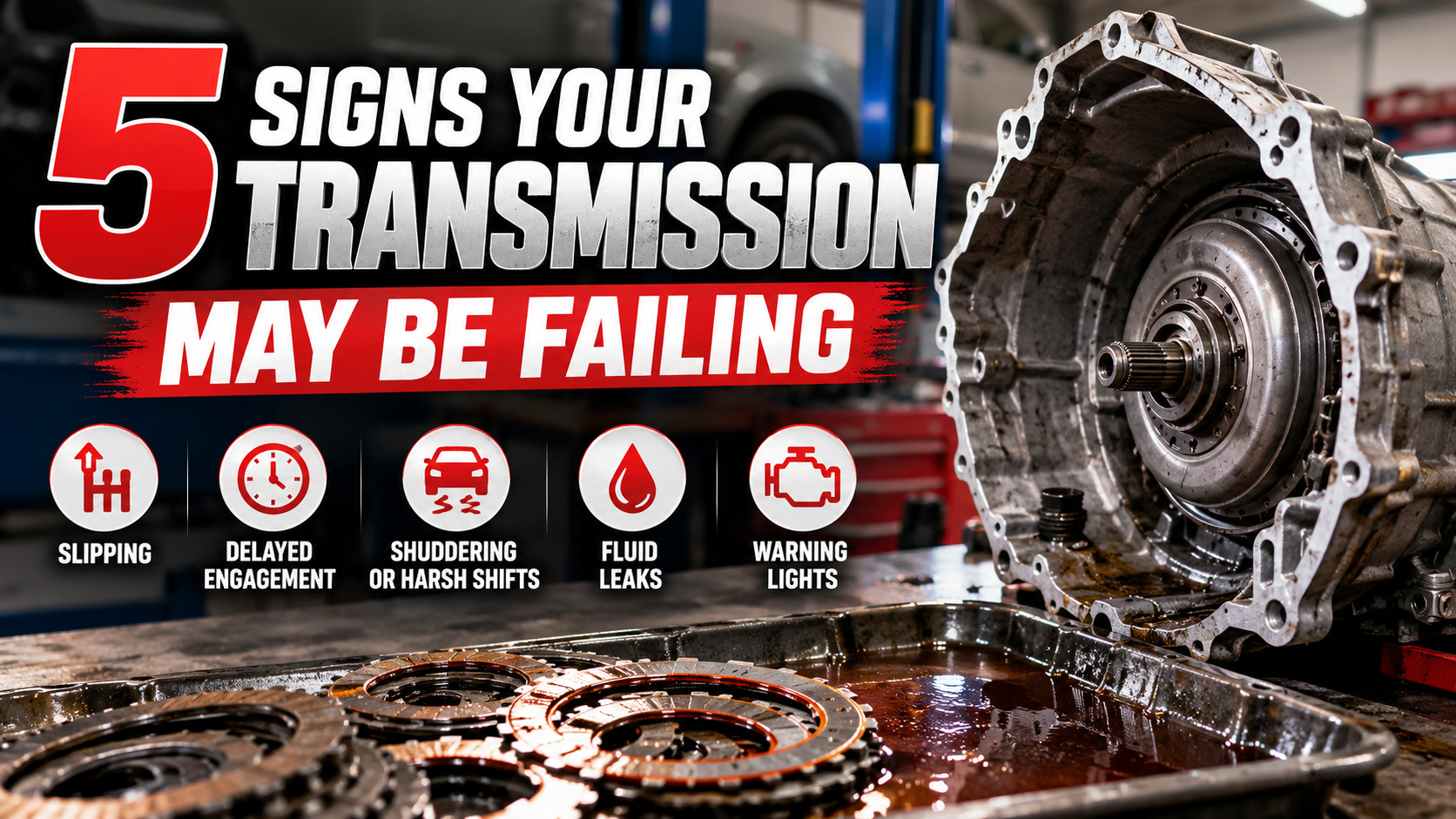
If a vehicle already has symptoms such as:
- Slipping
- Delayed engagement
- Shuddering
- Harsh or unusual shifts
- Transmission warning messages
- Loss of forward or reverse operation
we would rather determine why the symptom is occurring before treating a fluid service as the solution.
A transmission service is preventative maintenance.
It is not a repair for an existing internal transmission failure.
Depending on what we find, the appropriate next step could be routine service, repairing a leak, an electrical repair, additional testing, or addressing an internal transmission problem.
Diagnosis helps determine which one actually applies.
The Best Time to Service Transmission Fluid
One of the most important points about transmission maintenance is also one of the simplest:
The best time to maintain a transmission is before it develops a problem.
Servicing the correct fluid at an appropriate interval in a normally operating transmission is very different from trying to correct slipping, shuddering, delayed engagement, or other symptoms by changing fluid after a problem has already developed.
Preventative maintenance is intended to help protect a functioning transmission.
It shouldn't be confused with repairing a transmission that has already developed a mechanical, hydraulic, or electrical problem.
So, Should You Change the Fluid on a High-Mileage Vehicle?
In many cases, yes.
High mileage by itself is not a reason to avoid transmission maintenance forever.
If the transmission is operating normally, its condition is acceptable, and service is appropriate for that particular vehicle, maintaining the fluid may still be beneficial.
On the other hand, if the transmission has severely neglected fluid, significant contamination, existing symptoms, or evidence of internal damage, the situation deserves more consideration before routine maintenance is performed.
The answer isn't:
“Never change transmission fluid after a certain mileage.”
And it isn't:
“Change the fluid and it will fix the transmission.”
The better approach is to consider the vehicle's maintenance history, fluid condition, transmission condition, manufacturer recommendations, how the vehicle has been used, and how the transmission is actually operating.
Not Sure About Your Transmission?
If you have a high-mileage vehicle and aren't sure whether the transmission should be serviced, Tex's Auto Care in Lawrenceburg, Kentucky can help evaluate the vehicle and recommend the appropriate next step.
And if your transmission is already slipping, shuddering, leaking, shifting differently, or displaying a warning light, we can diagnose the problem before recommending a repair.
Contact Tex's Auto Care to schedule transmission service or a Transmission Diagnostic Evaluation.