By Tex's Auto Care
•
October 29, 2026
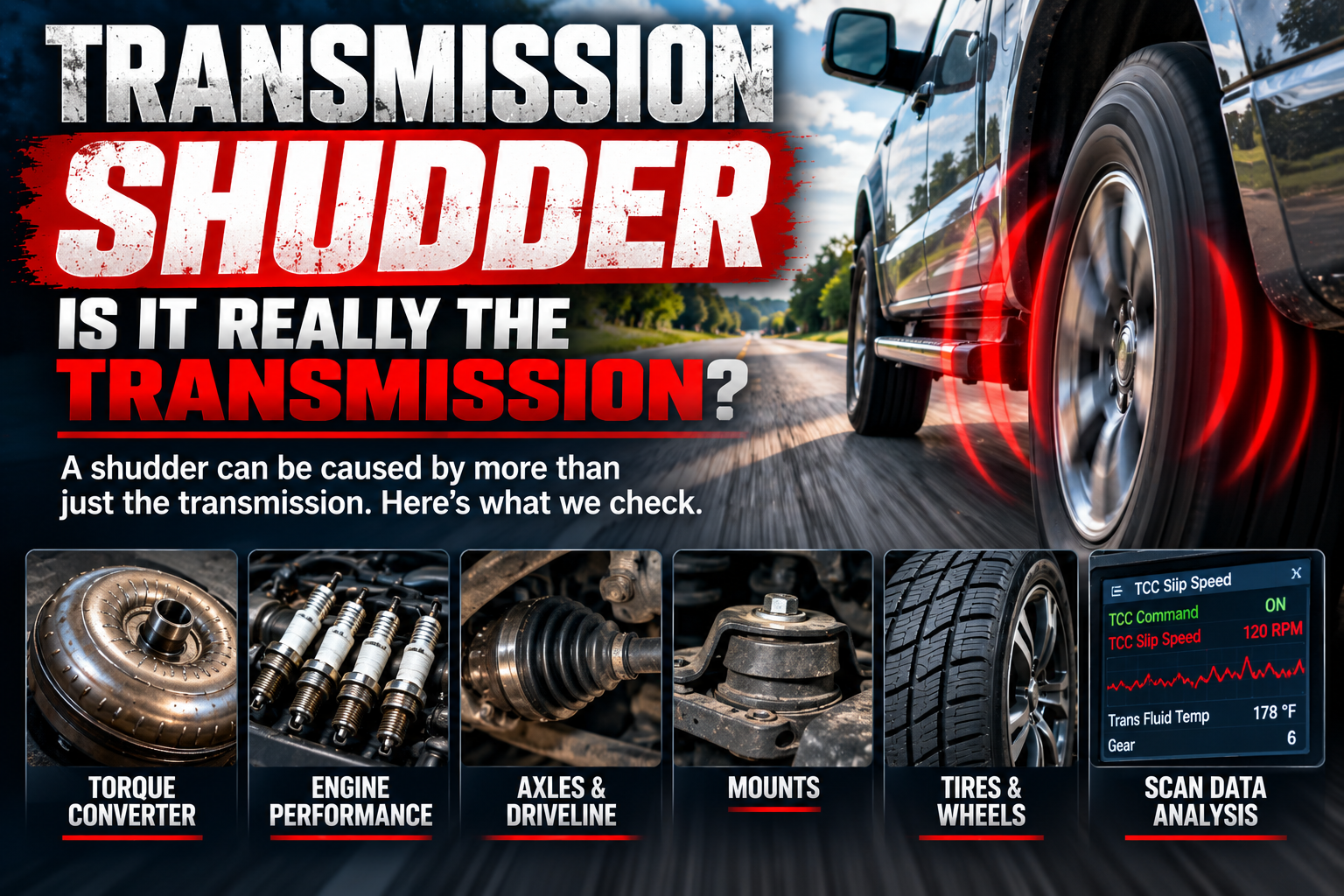
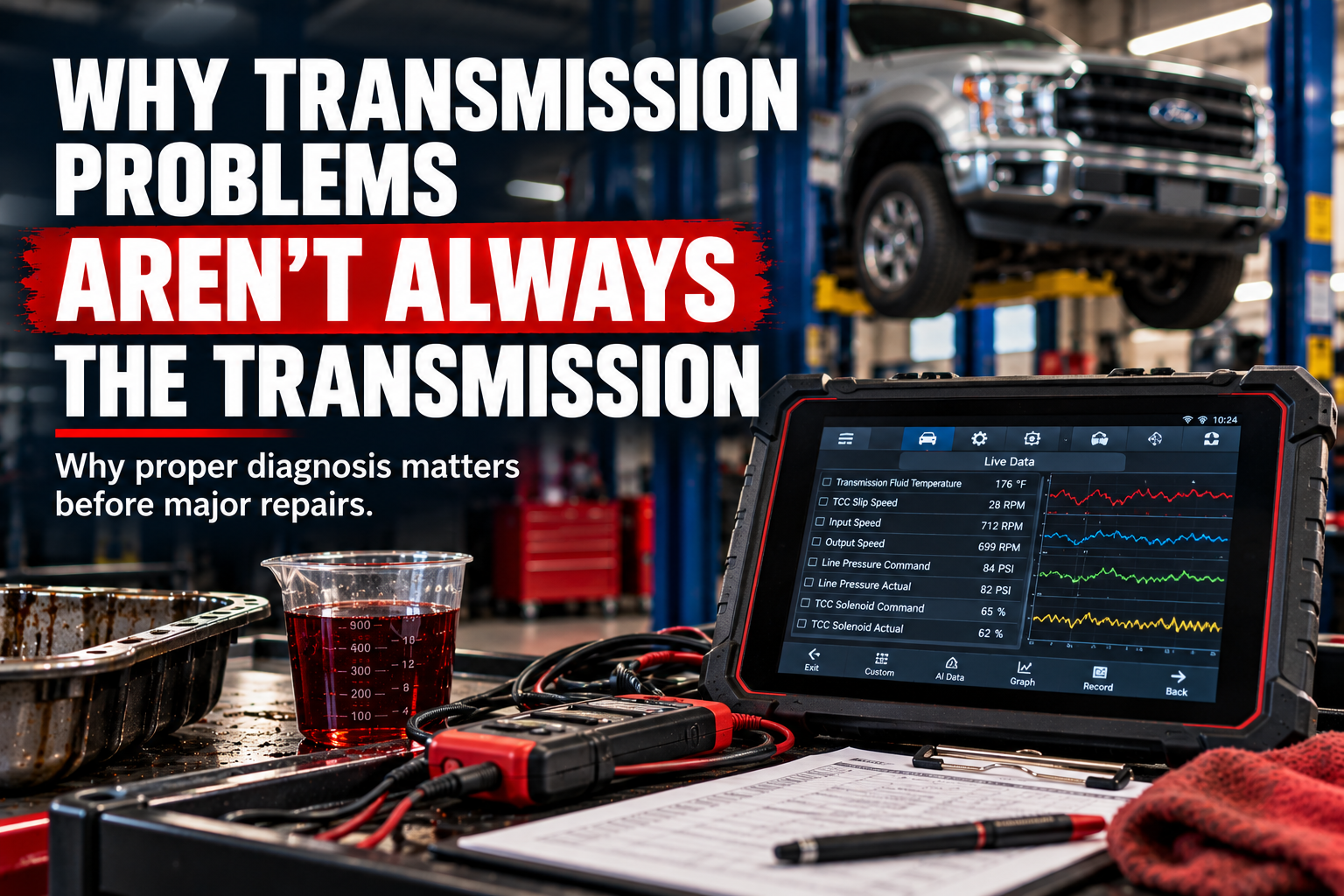
Transmission Shudder: Is It Really the Transmission? A shudder while driving can make it feel like something serious is happening inside the transmission. Sometimes it is. Torque converter clutch problems and internal transmission issues can cause a noticeable shudder. But engine performance problems, axles, mounts, tires, and other driveline components can create surprisingly similar symptoms. That's why the word “shudder” describes what the driver feels—it doesn't identify what's causing it. At Tex's Auto Care, we want to reproduce the symptom and determine when and why it's happening before recommending a repair. What Does a Transmission Shudder Feel Like? Different drivers describe a shudder in different ways. You might notice: A vibration during light acceleration A rumble-strip sensation while cruising Shaking at a particular speed A brief vibration during a shift Jerking or bucking under load A vibration that appears as the vehicle warms up A shudder that comes and goes at highway speeds Exactly when the symptom occurs can be just as important as what it feels like. Vehicle speed, engine load, gear, transmission temperature, throttle position, and whether the torque converter clutch is applied can all provide useful diagnostic information. What Is Torque Converter Clutch Shudder? The torque converter transfers engine power to an automatic transmission while allowing the engine to continue running when the vehicle is stopped. Modern torque converters also contain a torque converter clutch , often called the TCC. Under the right operating conditions, the transmission control system applies this clutch to create a more direct connection between the engine and transmission. This reduces unnecessary converter slip and can improve efficiency. If the clutch doesn't apply smoothly, the driver may experience a vibration commonly described as torque converter clutch shudder . It can sometimes feel similar to driving across a series of small rumble strips. But feeling that sensation doesn't automatically prove the torque converter is the problem. An Engine Misfire Can Feel Like Transmission Shudder One of the reasons shudder complaints require diagnosis is that an engine problem can feel remarkably similar from the driver's seat. An ignition or fuel-related misfire may become most noticeable when the engine is under load. That can happen during conditions such as: Light acceleration Climbing a hill Cruising in a higher gear Lower engine RPM Torque converter clutch application The driver feels the vehicle shake or hesitate and naturally suspects the transmission. Depending on the vehicle, scan-tool data may help us determine whether the engine is misfiring while the symptom occurs. If the engine is causing the shudder, replacing a torque converter or transmission isn't going to solve the problem. CV Axles and Driveline Components Can Cause Vibration Not every vibration comes from the engine or transmission. Worn or damaged driveline components can sometimes produce vibrations that change with vehicle speed or load. Depending on the vehicle, possible sources may include: CV axles Driveshafts Universal joints Support bearings Differentials Other driveline components A vibration that occurs primarily under acceleration, for example, may lead us down a different diagnostic path than one that happens while maintaining a steady speed. Again, the operating conditions matter. Engine and Transmission Mounts Can Change What You Feel Engine and transmission mounts are designed to support the powertrain while controlling movement and vibration. When a mount becomes worn, broken, or collapsed, normal powertrain movement may become much more noticeable inside the vehicle. A mount problem can contribute to: Vibration Clunks during acceleration or deceleration Harsh-feeling engagement into Drive or Reverse Excessive engine or transmission movement That doesn't mean mounts are responsible for every shudder. It means they're one of several things that may need to be considered depending on the symptoms. Tires and Wheels Can Feel Like a Drivetrain Problem Tire and wheel problems can also create vibrations that customers sometimes describe as a shudder. Possible causes include: Tire imbalance Tire damage or irregular wear Bent wheels Tire uniformity problems A tire-related vibration will often behave differently than a torque converter clutch problem. For example, a vibration closely tied to vehicle speed regardless of gear or engine load may point us in a different direction than a symptom that appears only during light-throttle torque converter clutch operation. Those differences are useful diagnostic clues. Why the Conditions Matter Suppose two customers both tell us: “My vehicle shudders at 45 mph.” They may have completely different problems. One vehicle might shudder only during light throttle when the torque converter clutch applies. Another might vibrate at 45 mph whether accelerating, coasting, or maintaining speed. Another might only do it while climbing a hill. Another might begin shaking because the engine starts misfiring under load. The speed is the same. The cause may not be. That's why we want to know things like: What speed does it happen? Is the vehicle accelerating or cruising? Does it happen under heavy or light throttle? Is the vehicle cold or at operating temperature? Does engine RPM change? Does it happen in one gear? Does it change when you let off the accelerator? Does it happen every time? Are there any warning lights or messages? These details can help determine what needs to be tested. How Scan Data Can Help Diagnose a Shudder A capable scan tool allows us to see information from the vehicle's control systems while the vehicle is operating. Depending on the vehicle, useful information during a shudder complaint may include: Engine RPM Transmission input or turbine speed Transmission output speed Commanded gear Torque converter clutch command Torque converter clutch slip Transmission fluid temperature Throttle position Engine load Misfire information Other vehicle-specific data This becomes especially useful when we can reproduce the customer's complaint. If the shudder consistently occurs at the same time the torque converter clutch is being commanded and the data shows abnormal converter behavior, that's useful evidence. If the torque converter is operating normally while the engine begins misfiring, that sends the diagnosis in another direction. The scan data doesn't replace diagnosis. It helps us understand what's happening when the symptom occurs. Does Transmission Fluid Cause Shudder? Fluid condition can be relevant to torque converter clutch operation. Automatic transmission fluid doesn't simply lubricate the transmission. Depending on the design, it also plays an important role in hydraulic operation, cooling, and clutch friction characteristics. As fluid ages, heat and normal use can change its condition and the performance of its additive package. However, this doesn't mean every shudder should automatically receive a transmission fluid service. Before recommending maintenance as a solution to a drivability complaint, we want to understand what the vehicle is actually doing. A transmission service is maintenance. It isn't a substitute for diagnosing an existing problem. What About Transmission Additives? There are products marketed specifically for transmission shudder. In certain circumstances, a manufacturer may have a specific fluid specification, service procedure, or updated fluid recommendation related to torque converter clutch operation. That's different from assuming that every shudder should be treated by pouring an aftermarket additive into the transmission. If the shudder is caused by an engine misfire, damaged axle, failing mount, electrical problem, or significant internal transmission damage, an additive isn't addressing the cause. We would rather determine what is happening first. Does a Shudder Mean the Torque Converter Needs to Be Replaced? Not necessarily. Even when testing indicates the symptom is related to torque converter clutch operation, the appropriate repair depends on why the clutch isn't operating correctly and the condition of the rest of the transmission. Depending on the vehicle and the findings, the problem could potentially involve: Fluid condition Hydraulic operation Valve-body operation Electronic controls Torque converter clutch wear Internal transmission wear or damage A torque converter operates as part of a complete system. The diagnostic process should determine as much as reasonably possible about that system before deciding what needs to be repaired. Why We Try to Reproduce the Shudder Intermittent problems can be difficult to diagnose when the vehicle isn't currently exhibiting the symptom. If the customer says the shudder only occurs after 30 minutes of driving, testing the vehicle for five minutes may not tell us much. Likewise, a problem that occurs during light-throttle cruising may not appear during hard acceleration. When possible, reproducing the complaint allows us to observe what the vehicle is doing at the moment the problem occurs . That gives us much better information than guessing based solely on how the symptom was described. What Should You Tell the Shop? If your vehicle has a shudder or vibration, details can help us tremendously. Before bringing it in, pay attention to: Approximate vehicle speed Whether you're accelerating or cruising Light or heavy throttle Whether the vehicle is cold or warmed up How long you've been driving Whether it happens going uphill Whether the engine RPM changes Whether it changes when you release the accelerator Whether any warning lights appear Whether the symptom is becoming more frequent You don't need to diagnose the vehicle yourself. Just tell us what you're experiencing. Those observations can help us reproduce the problem. When Should a Shudder Be Checked? A new or worsening shudder shouldn't be ignored. If the vehicle is also experiencing significant slipping, loss of movement, severe shaking, unusual noises, warning messages, overheating, or other major changes in operation, continuing to drive it could potentially cause additional damage or create a safety concern. For a mild or intermittent shudder, scheduling an evaluation before the condition becomes worse gives us an opportunity to determine what's happening. The Symptom Is the Starting Point A vehicle that shudders may have a transmission problem. It may have a torque converter problem. Or the transmission may be operating exactly as it should while another system creates a similar sensation. That's why we don't want to diagnose a vehicle from the word “shudder” alone. The symptom tells us where the investigation starts. Testing helps determine where it ends. Is Your Vehicle Shuddering? If your vehicle shudders, vibrates, hesitates, or feels like it's driving across rumble strips, Tex's Auto Care in Lawrenceburg, Kentucky can help determine what's causing it. We'll start by understanding the complaint, attempt to reproduce the symptom, evaluate the available data, and follow the evidence with the appropriate testing. Contact Tex's Auto Care to schedule a Transmission Diagnostic Evaluation.