What Does a Transmission Diagnostic Actually Include?

Tex's Auto Care • November 11, 2026

What Does a Transmission Diagnostic Actually Include?

When a vehicle starts slipping, shuddering, shifting hard, hesitating, or displaying a transmission warning, one of the first questions we hear is:

“Can you plug it in and tell me what's wrong?”

Connecting a scan tool is an important part of diagnosing many modern transmission problems, but it's rarely the entire diagnosis.

A diagnostic trouble code can tell us what the vehicle's computer has detected. It doesn't necessarily tell us why it happened or which part needs to be replaced.

A proper transmission diagnostic evaluation is a process of gathering information, verifying the complaint, analyzing how the vehicle is operating, and performing additional testing based on what the evidence tells us.

At Tex's Auto Care, the goal of transmission diagnosis isn't to prove that a transmission is bad.

The goal is to determine what's causing the vehicle to behave the way it is.

Step 1: Understanding the Customer's Complaint

Good diagnosis starts before a scan tool is connected.

We first need to understand what the driver is experiencing.

A customer might tell us:

  • “It feels like it's slipping.”
  • “It shudders around 45 mph.”
  • “It bangs when I put it in Drive.”
  • “It doesn't want to shift when it's cold.”
  • “The RPM goes up but the vehicle doesn't accelerate.”
  • “Sometimes it won't move when I put it in Reverse.”
  • “The transmission warning came on.”
  • “It only does it after I've been driving for a while.”

Those details matter.

What one person describes as a transmission “slip” might actually be an engine hesitation, torque converter shudder, delayed engagement, harsh shift, or driveline vibration.

Before deciding what to test, we need to understand the symptom we're trying to diagnose.

Step 2: Performing a Preliminary Inspection

Before getting deep into testing, we may perform a preliminary inspection of the vehicle and transmission.

Depending on the vehicle and complaint, that may include checking for:

  • Transmission fluid leaks
  • Damaged wiring or connectors
  • Obvious mechanical problems
  • Fluid level when it can be properly checked
  • Fluid condition
  • Other visible concerns related to the complaint

Modern transmissions vary significantly in how their fluid is checked.

Some have traditional dipsticks. Others require the vehicle to be level and the transmission fluid to be within a specific temperature range before the level can be checked through a fill or level plug.

Following the correct procedure matters.

Step 3: Scanning the Vehicle's Computer Systems

A modern vehicle may contain dozens of electronic control modules, and a transmission problem doesn't always exist in isolation.

Rather than looking only for a transmission code, a complete system scan can provide valuable information about what's happening throughout the vehicle.

We may find codes related to:

  • Transmission operation
  • Engine performance
  • ABS or wheel-speed systems
  • Communication between modules
  • Voltage or electrical problems
  • Other systems that may influence transmission operation

This is important because the transmission control system depends on information from other parts of the vehicle.

A code stored in another module may provide an important clue about what the driver is experiencing.

Step 4: Understanding What the Trouble Codes Actually Mean

Finding a trouble code doesn't complete the diagnosis.

It gives us information.

For example, the vehicle may report a condition involving:

  • Incorrect gear ratio
  • Torque converter clutch performance
  • Pressure control
  • Shift solenoid performance
  • Input or output speed signals
  • Transmission temperature
  • Electrical circuit faults
  • Communication problems

The code tells us what the control module detected.

It doesn't necessarily identify the failed component.

An incorrect gear-ratio code, for example, may tell us that the transmission didn't achieve the ratio the computer expected. Additional testing may still be needed to determine why.

That's the difference between reading a code and diagnosing a vehicle.

Step 5: Verifying the Complaint

Whenever possible, we want to experience the problem the customer is describing.

That may require a road test.

During the road test, we're not simply determining whether the vehicle shifts.

We may be paying attention to:

  • When each shift occurs
  • Shift quality
  • Engine RPM during shifts
  • Transmission input and output speeds
  • Torque converter clutch operation
  • Engine load
  • Throttle position
  • Transmission temperature
  • Whether the symptom changes hot versus cold
  • Whether the problem occurs under acceleration, cruising, or deceleration

Some problems happen constantly.

Others only occur at a particular speed, temperature, throttle position, or operating condition.

Being able to reproduce the symptom can make a major difference in determining its cause.

Step 6: Looking at Live Data

One of the most useful capabilities of a modern scan tool is seeing what the vehicle's computers are seeing while the vehicle is operating.

This is called live data.

Depending on the vehicle and the problem, we may monitor information such as:

  • Commanded gear
  • Actual gear ratio
  • Input or turbine speed
  • Output speed
  • Engine RPM
  • Torque converter clutch command
  • Torque converter clutch slip
  • Transmission fluid temperature
  • Shift or pressure-control commands
  • Throttle position
  • Engine load
  • Brake-switch status
  • Wheel-speed information

Live data allows us to compare what the computer is commanding with what the vehicle is actually doing.

For example, if a customer feels a shudder during light acceleration, scan data may help determine whether the symptom occurs while the torque converter clutch is applying—or whether something completely different is happening at the same time.

The scan tool doesn't make that decision for us.

It provides information that has to be interpreted.

Step 7: Looking Beyond the Transmission

Sometimes the evidence points somewhere other than the transmission.

An engine misfire under load can feel similar to a torque converter shudder.

A damaged engine or transmission mount can make an engagement feel much harsher than it actually is.

A wheel-speed signal problem may affect transmission strategy on some vehicles.

Electrical or charging-system problems can create strange behavior across multiple vehicle systems.

Driveline components can create vibrations that feel like they're coming from the transmission.

That's why transmission diagnosis sometimes involves evaluating systems outside the transmission.

Replacing or rebuilding a transmission won't correct a problem that originates somewhere else.

Step 8: Checking Service Information

Modern vehicles are complicated, and good diagnosis isn't based entirely on memory.

Manufacturer service information can provide:

  • Diagnostic procedures
  • Wiring diagrams
  • Connector information
  • Specifications
  • Fluid-level procedures
  • Technical service bulletins
  • Known operating characteristics
  • Test procedures
  • Component locations

Technical information helps us compare what we're seeing on the vehicle with how the system was designed to operate.

It can also prevent unnecessary testing when the manufacturer has already documented a known condition or diagnostic procedure.

Step 9: Performing Targeted Testing

This is where transmission diagnosis can vary significantly from one vehicle to another.

There isn't one test that every vehicle automatically receives.

Instead, the information gathered during the earlier steps determines what testing makes sense next.

Depending on the problem, additional testing may include:

  • Electrical circuit testing
  • Wiring and connector testing
  • Solenoid testing
  • Sensor testing
  • Voltage-drop testing
  • Hydraulic pressure testing
  • Fluid or pan inspection
  • Mechanical testing
  • Additional scan-tool testing
  • Transmission-specific functional tests

A vehicle with a solenoid circuit code may require a completely different diagnostic path than a vehicle with delayed engagement or excessive torque converter clutch slip.

Good diagnosis follows the evidence.

Why Doesn't Every Transmission Get the Same Tests?

Because every complaint isn't the same.

If a vehicle has an obvious external wiring problem, performing hydraulic pressure tests before addressing that electrical fault may not make sense.

Likewise, if scan data shows evidence of an internal slipping condition, the next step may be very different.

Diagnostic testing should answer questions.

Each result should help determine what needs to be checked next.

That's more effective than performing the same checklist of tests on every vehicle regardless of the complaint.

Why Can Transmission Diagnosis Take Time?

Some transmission problems are relatively straightforward.

Others aren't.

Intermittent problems can be particularly challenging because the vehicle may operate normally when it first arrives.

A symptom might only occur:

  • After the transmission reaches operating temperature
  • During a cold start
  • At highway speed
  • Under heavy acceleration
  • During light throttle
  • While towing or carrying a load
  • After an extended drive
  • Only occasionally

In those situations, reproducing the problem may be part of the diagnostic process.

Testing also sometimes reveals that another test is needed before a responsible repair recommendation can be made.

The objective isn't to perform as many tests as possible.

It's to gather enough reliable information to make the right recommendation.

Does a Transmission Diagnostic Always Tell Us Everything Without Disassembly?

Not necessarily.

There are limits to what can be determined from outside a transmission.

Scan data, pressure testing, electrical testing, fluid condition, operating symptoms, and other evidence may strongly indicate an internal failure.

But sometimes determining the exact extent of internal damage requires removing and disassembling the transmission.

That distinction is important.

A diagnostic evaluation may determine that an internal transmission failure exists without being able to identify every damaged clutch, bearing, seal, or hard part before the unit is opened.

In those situations, we'll explain what the testing indicates and what the appropriate next step is.

What Happens After the Diagnosis?

Once we've gathered enough information, the next step is determining what repair—if any—is appropriate.

Depending on what we find, the recommendation might involve:

  • No transmission repair at all
  • Routine maintenance
  • Repairing a fluid leak
  • Electrical or wiring repair
  • Sensor or solenoid repair
  • Valve-body or hydraulic repair
  • Torque converter repair or replacement
  • Internal transmission repair
  • Transmission rebuild
  • Remanufactured or replacement transmission
  • Repairing another vehicle system causing the symptom

Sometimes the answer is relatively inexpensive.

Sometimes testing confirms a significant internal transmission problem.

Either way, the purpose of diagnosis is the same:

Determine what's wrong before deciding what to replace.

Diagnosis Is More Than Plugging In a Scanner

Modern scan tools are incredibly powerful diagnostic tools.

But they're still tools.

They provide trouble codes, operating data, commands, measurements, and other information that help a trained technician understand what the vehicle is doing.

The scan tool doesn't automatically know whether a transmission needs to be rebuilt.

It doesn't know whether a shudder is actually coming from the engine.

And it doesn't replace testing, service information, experience, or understanding how the system works.

That's why a proper transmission diagnostic evaluation is more than simply plugging into the vehicle and reading a code.

Having Transmission Trouble?

If your vehicle is slipping, shuddering, shifting hard, hesitating, leaking transmission fluid, displaying a warning message, or simply isn't operating the way it should, Tex's Auto Care in Lawrenceburg, Kentucky can help.

Our goal is to identify the cause of the problem and give you the information needed to make an informed repair decision.

Contact Tex's Auto Care to schedule a Transmission Diagnostic Evaluation.

By Tex's Auto Care • November 5, 2026
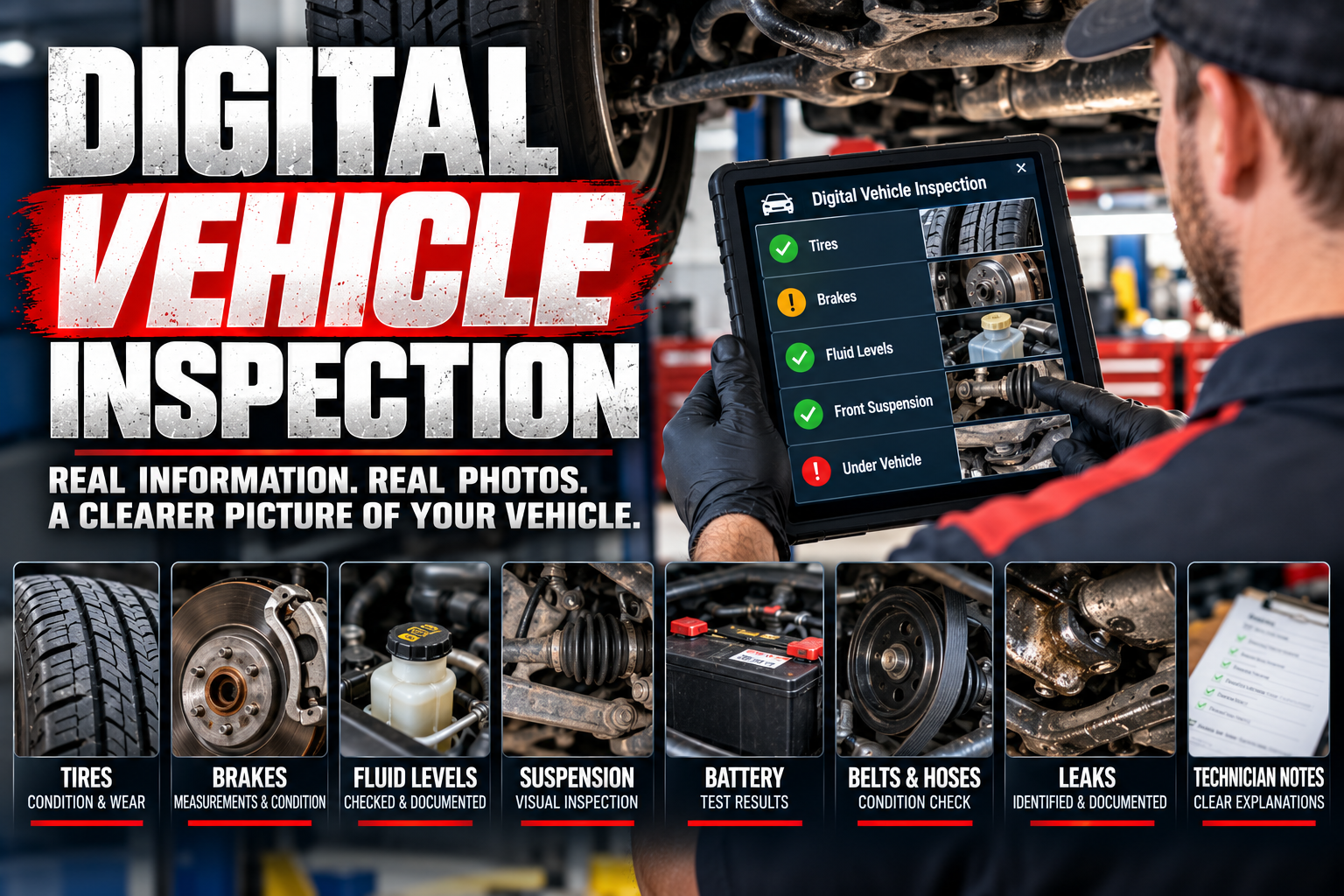
What Is a Digital Vehicle Inspection and Why Do We Do One on Every Vehicle? When you bring your vehicle to Tex's Auto Care, you may receive a link showing photos, technician notes, and information about the condition of different parts of your vehicle. That's your Digital Vehicle Inspection , or DVI. A Digital Vehicle Inspection gives you a clearer picture of your vehicle's overall condition while it's in our shop. Instead of simply being told that something needs attention, you can often see what our technician is seeing and better understand why we're making a recommendation. At Tex's Auto Care, we perform a Digital Vehicle Inspection as part of our normal service process because we believe customers should have good information before making decisions about their vehicles. What Is a Digital Vehicle Inspection? A Digital Vehicle Inspection is a documented inspection performed by a technician using a tablet or other digital device. As the technician works through the inspection, findings can be documented with: Photos Technician notes Measurements when appropriate Condition information Recommended maintenance or repairs The completed inspection can then be sent directly to the customer. This creates a visual record of what was inspected and allows you to review the findings without having to stand underneath your vehicle in the shop. What Do We Inspect? Our inspection covers many of the major systems and components that can be reasonably evaluated during a routine visit. Depending on the vehicle and accessibility, that can include areas such as: Tires and tire condition Brakes Steering and suspension components Fluid levels and condition Visible fluid leaks Belts and hoses Battery condition Exterior lights Wiper blades Underhood components Under-vehicle components Other visible maintenance or safety concerns Not every component of a vehicle can be fully evaluated during a visual inspection, and some systems require specific testing or disassembly to determine their condition. The DVI is designed to provide useful information about what can be observed during the inspection—not to replace diagnosis when a vehicle has a specific problem. Why Do We Take Photos? Photos are one of the biggest advantages of a Digital Vehicle Inspection. If we tell you that a tire is worn unevenly, a component is leaking, or a belt is deteriorating, a photo may allow you to see the condition yourself. That helps remove some of the uncertainty from the conversation. Instead of: “The shop says I need this.” You may be able to see: “That's what they're looking at.” Not every finding can be meaningfully photographed, but when a photo can help explain a condition, we want to provide it. Why Do We Include Technician Notes? A photograph doesn't always tell the entire story. Technician notes provide context. A technician may document what was observed, where a leak appears to be located, a measurement that was taken, or why something deserves additional attention. Those notes also create a record that can be useful on future visits. For example, something that isn't urgent today may be worth monitoring over time. Having previous inspection information available can help us determine whether a condition has remained relatively stable or is getting worse. Does Everything on the Inspection Need to Be Repaired Today? No. This is an important part of understanding a DVI. The purpose of the inspection isn't to create the largest possible repair estimate. It's to give you information about your vehicle. Some findings may require immediate attention. Others may be maintenance items that are due or approaching their recommended service interval. Some may simply be things we want you to know about and monitor. A useful inspection should help distinguish between those situations. We want you to understand what needs attention, why it matters, and how urgent it is so you can make an informed decision. Why Inspect the Vehicle If It's Only Here for an Oil Change? Because the reason a vehicle came into the shop isn't always the only thing worth knowing about. You might bring your vehicle in for routine maintenance while a tire is beginning to wear unevenly, a fluid leak is developing, or another component is showing signs of wear. Catching a problem early doesn't guarantee that it will be inexpensive to repair, but it can sometimes give you more options. It also reduces the chance that the first time you learn about a problem is after it leaves you stranded or causes damage to another component. Routine visits give us an opportunity to look at the vehicle and document what we see. Why Inspect a Vehicle That's Already Here for a Repair? The same principle applies when your vehicle is in the shop for something unrelated. Suppose your vehicle comes in because the air conditioning isn't working. Diagnosing the A/C problem tells us what's wrong with the A/C. It doesn't tell us the condition of the tires, brakes, suspension, fluids, or other areas of the vehicle. The DVI provides a broader look at the vehicle while it's already in the shop. That can be especially useful if you're deciding how much money to invest in a repair. Knowing more about the overall condition of the vehicle can help you make that decision with better information. A DVI Is Not the Same as a Diagnosis This distinction is important. A Digital Vehicle Inspection is an inspection. Diagnosis is testing performed to determine the cause of a specific problem. For example, during an inspection we might notice: A fluid leak Uneven tire wear A warning light A noise A damaged component An abnormal condition The inspection may identify the concern, but additional diagnostic testing may be necessary to determine exactly why it's happening or what repair is required. Finding coolant underneath an engine doesn't automatically tell us where every leak originates. Finding an illuminated Check Engine Light doesn't tell us which part should be replaced. Finding uneven tire wear doesn't automatically identify which steering, suspension, alignment, or tire condition is responsible. Inspection finds information. Diagnosis answers specific questions. Sometimes the DVI provides the information we need. Other times it tells us that additional testing should be recommended. What If My Vehicle Is in Great Condition? That's useful information too. A Digital Vehicle Inspection isn't only about finding problems. If the tires look good, brakes have plenty of usable life, fluid levels are appropriate, and the areas inspected don't show significant concerns, that should be documented as well. Knowing that something doesn't currently require attention can be just as valuable as knowing that it does. We don't believe every inspection needs to result in a list of repairs. Can a Digital Inspection Help With Future Maintenance? Yes. One of the advantages of documenting vehicle condition is that maintenance and wear can be planned instead of always being reactive. If something is beginning to wear but doesn't require immediate replacement, you may be able to plan for it. That could mean addressing it at your next oil change, before an upcoming trip, or simply monitoring it until its condition changes. Vehicles are expensive to own. We believe giving customers time to plan for upcoming maintenance and repairs is better than creating unnecessary surprises whenever possible. Why Do We Send the Inspection to Your Phone? Convenience is part of it. Most customers aren't standing beside the technician while their vehicle is being inspected. Sending the inspection digitally allows you to review the information wherever you are. You can look at the photos, read the technician's notes, and then discuss the findings with your service advisor. It also gives you an opportunity to review the information without trying to remember everything from a phone conversation. If you have questions about something on the inspection, ask us. We want the information to make sense. Does a Good Inspection Mean Nothing Will Go Wrong Later? Unfortunately, no inspection can guarantee that a vehicle won't develop a problem. Vehicles contain thousands of components, many of which cannot be completely evaluated without testing or disassembly. Some failures occur with little or no visible warning. A Digital Vehicle Inspection reflects the conditions that can reasonably be observed at the time the vehicle is inspected . It is an important tool for identifying visible concerns and maintenance needs, but it isn't a prediction of everything that could happen in the future. Why Do We Perform Digital Vehicle Inspections? It comes down to communication. We don't want customers making repair decisions based only on: “Trust us, you need it.” We would rather show you what we can, explain what we found, tell you what we recommend, and help you understand which items deserve attention. Then you can make the decision. That's the purpose of our Digital Vehicle Inspection. Better information leads to better conversations about your vehicle. Need Service or Want to Know More About Your Vehicle? Whether your vehicle is due for routine maintenance, has a specific problem, or you simply want a better understanding of its current condition, Tex's Auto Care in Lawrenceburg, Kentucky can help. Our Digital Vehicle Inspection process helps document the condition of your vehicle and gives you useful information about maintenance, repairs, and items that may need attention in the future. Contact Tex's Auto Care to schedule your next service.
By Tex's Auto Care • October 29, 2026
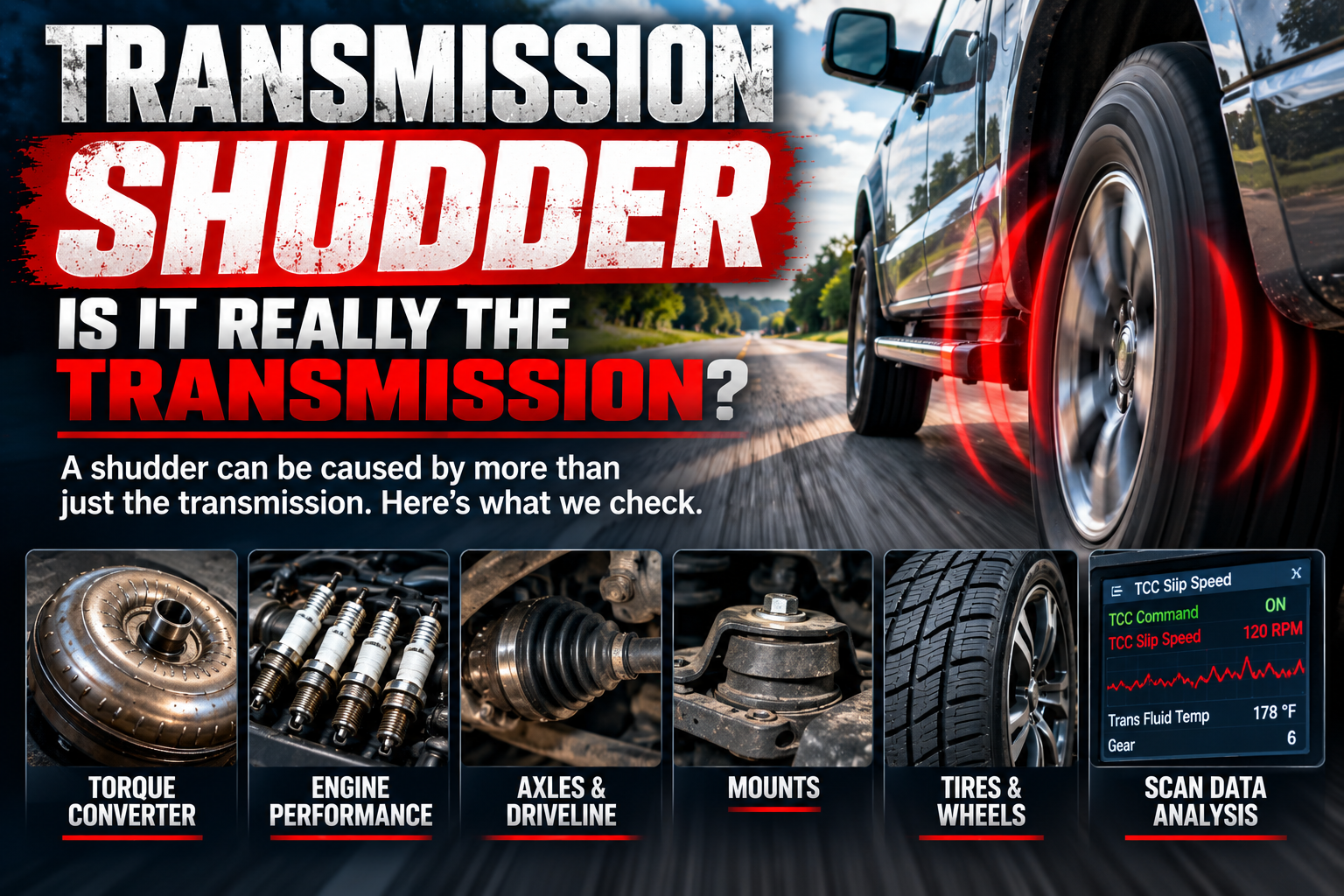
Transmission Shudder: Is It Really the Transmission? A shudder while driving can make it feel like something serious is happening inside the transmission. Sometimes it is. Torque converter clutch problems and internal transmission issues can cause a noticeable shudder. But engine performance problems, axles, mounts, tires, and other driveline components can create surprisingly similar symptoms. That's why the word “shudder” describes what the driver feels—it doesn't identify what's causing it. At Tex's Auto Care, we want to reproduce the symptom and determine when and why it's happening before recommending a repair. What Does a Transmission Shudder Feel Like? Different drivers describe a shudder in different ways. You might notice: A vibration during light acceleration A rumble-strip sensation while cruising Shaking at a particular speed A brief vibration during a shift Jerking or bucking under load A vibration that appears as the vehicle warms up A shudder that comes and goes at highway speeds Exactly when the symptom occurs can be just as important as what it feels like. Vehicle speed, engine load, gear, transmission temperature, throttle position, and whether the torque converter clutch is applied can all provide useful diagnostic information. What Is Torque Converter Clutch Shudder? The torque converter transfers engine power to an automatic transmission while allowing the engine to continue running when the vehicle is stopped. Modern torque converters also contain a torque converter clutch , often called the TCC. Under the right operating conditions, the transmission control system applies this clutch to create a more direct connection between the engine and transmission. This reduces unnecessary converter slip and can improve efficiency. If the clutch doesn't apply smoothly, the driver may experience a vibration commonly described as torque converter clutch shudder . It can sometimes feel similar to driving across a series of small rumble strips. But feeling that sensation doesn't automatically prove the torque converter is the problem. An Engine Misfire Can Feel Like Transmission Shudder One of the reasons shudder complaints require diagnosis is that an engine problem can feel remarkably similar from the driver's seat. An ignition or fuel-related misfire may become most noticeable when the engine is under load. That can happen during conditions such as: Light acceleration Climbing a hill Cruising in a higher gear Lower engine RPM Torque converter clutch application The driver feels the vehicle shake or hesitate and naturally suspects the transmission. Depending on the vehicle, scan-tool data may help us determine whether the engine is misfiring while the symptom occurs. If the engine is causing the shudder, replacing a torque converter or transmission isn't going to solve the problem. CV Axles and Driveline Components Can Cause Vibration Not every vibration comes from the engine or transmission. Worn or damaged driveline components can sometimes produce vibrations that change with vehicle speed or load. Depending on the vehicle, possible sources may include: CV axles Driveshafts Universal joints Support bearings Differentials Other driveline components A vibration that occurs primarily under acceleration, for example, may lead us down a different diagnostic path than one that happens while maintaining a steady speed. Again, the operating conditions matter. Engine and Transmission Mounts Can Change What You Feel Engine and transmission mounts are designed to support the powertrain while controlling movement and vibration. When a mount becomes worn, broken, or collapsed, normal powertrain movement may become much more noticeable inside the vehicle. A mount problem can contribute to: Vibration Clunks during acceleration or deceleration Harsh-feeling engagement into Drive or Reverse Excessive engine or transmission movement That doesn't mean mounts are responsible for every shudder. It means they're one of several things that may need to be considered depending on the symptoms. Tires and Wheels Can Feel Like a Drivetrain Problem Tire and wheel problems can also create vibrations that customers sometimes describe as a shudder. Possible causes include: Tire imbalance Tire damage or irregular wear Bent wheels Tire uniformity problems A tire-related vibration will often behave differently than a torque converter clutch problem. For example, a vibration closely tied to vehicle speed regardless of gear or engine load may point us in a different direction than a symptom that appears only during light-throttle torque converter clutch operation. Those differences are useful diagnostic clues. Why the Conditions Matter Suppose two customers both tell us: “My vehicle shudders at 45 mph.” They may have completely different problems. One vehicle might shudder only during light throttle when the torque converter clutch applies. Another might vibrate at 45 mph whether accelerating, coasting, or maintaining speed. Another might only do it while climbing a hill. Another might begin shaking because the engine starts misfiring under load. The speed is the same. The cause may not be. That's why we want to know things like: What speed does it happen? Is the vehicle accelerating or cruising? Does it happen under heavy or light throttle? Is the vehicle cold or at operating temperature? Does engine RPM change? Does it happen in one gear? Does it change when you let off the accelerator? Does it happen every time? Are there any warning lights or messages? These details can help determine what needs to be tested. How Scan Data Can Help Diagnose a Shudder A capable scan tool allows us to see information from the vehicle's control systems while the vehicle is operating. Depending on the vehicle, useful information during a shudder complaint may include: Engine RPM Transmission input or turbine speed Transmission output speed Commanded gear Torque converter clutch command Torque converter clutch slip Transmission fluid temperature Throttle position Engine load Misfire information Other vehicle-specific data This becomes especially useful when we can reproduce the customer's complaint. If the shudder consistently occurs at the same time the torque converter clutch is being commanded and the data shows abnormal converter behavior, that's useful evidence. If the torque converter is operating normally while the engine begins misfiring, that sends the diagnosis in another direction. The scan data doesn't replace diagnosis. It helps us understand what's happening when the symptom occurs. Does Transmission Fluid Cause Shudder? Fluid condition can be relevant to torque converter clutch operation. Automatic transmission fluid doesn't simply lubricate the transmission. Depending on the design, it also plays an important role in hydraulic operation, cooling, and clutch friction characteristics. As fluid ages, heat and normal use can change its condition and the performance of its additive package. However, this doesn't mean every shudder should automatically receive a transmission fluid service. Before recommending maintenance as a solution to a drivability complaint, we want to understand what the vehicle is actually doing. A transmission service is maintenance. It isn't a substitute for diagnosing an existing problem. What About Transmission Additives? There are products marketed specifically for transmission shudder. In certain circumstances, a manufacturer may have a specific fluid specification, service procedure, or updated fluid recommendation related to torque converter clutch operation. That's different from assuming that every shudder should be treated by pouring an aftermarket additive into the transmission. If the shudder is caused by an engine misfire, damaged axle, failing mount, electrical problem, or significant internal transmission damage, an additive isn't addressing the cause. We would rather determine what is happening first. Does a Shudder Mean the Torque Converter Needs to Be Replaced? Not necessarily. Even when testing indicates the symptom is related to torque converter clutch operation, the appropriate repair depends on why the clutch isn't operating correctly and the condition of the rest of the transmission. Depending on the vehicle and the findings, the problem could potentially involve: Fluid condition Hydraulic operation Valve-body operation Electronic controls Torque converter clutch wear Internal transmission wear or damage A torque converter operates as part of a complete system. The diagnostic process should determine as much as reasonably possible about that system before deciding what needs to be repaired. Why We Try to Reproduce the Shudder Intermittent problems can be difficult to diagnose when the vehicle isn't currently exhibiting the symptom. If the customer says the shudder only occurs after 30 minutes of driving, testing the vehicle for five minutes may not tell us much. Likewise, a problem that occurs during light-throttle cruising may not appear during hard acceleration. When possible, reproducing the complaint allows us to observe what the vehicle is doing at the moment the problem occurs . That gives us much better information than guessing based solely on how the symptom was described. What Should You Tell the Shop? If your vehicle has a shudder or vibration, details can help us tremendously. Before bringing it in, pay attention to: Approximate vehicle speed Whether you're accelerating or cruising Light or heavy throttle Whether the vehicle is cold or warmed up How long you've been driving Whether it happens going uphill Whether the engine RPM changes Whether it changes when you release the accelerator Whether any warning lights appear Whether the symptom is becoming more frequent You don't need to diagnose the vehicle yourself. Just tell us what you're experiencing. Those observations can help us reproduce the problem. When Should a Shudder Be Checked? A new or worsening shudder shouldn't be ignored. If the vehicle is also experiencing significant slipping, loss of movement, severe shaking, unusual noises, warning messages, overheating, or other major changes in operation, continuing to drive it could potentially cause additional damage or create a safety concern. For a mild or intermittent shudder, scheduling an evaluation before the condition becomes worse gives us an opportunity to determine what's happening. The Symptom Is the Starting Point A vehicle that shudders may have a transmission problem. It may have a torque converter problem. Or the transmission may be operating exactly as it should while another system creates a similar sensation. That's why we don't want to diagnose a vehicle from the word “shudder” alone. The symptom tells us where the investigation starts. Testing helps determine where it ends. Is Your Vehicle Shuddering? If your vehicle shudders, vibrates, hesitates, or feels like it's driving across rumble strips, Tex's Auto Care in Lawrenceburg, Kentucky can help determine what's causing it. We'll start by understanding the complaint, attempt to reproduce the symptom, evaluate the available data, and follow the evidence with the appropriate testing. Contact Tex's Auto Care to schedule a Transmission Diagnostic Evaluation.
By Tex's Transmissions Complete Auto & Truck Care • October 20, 2026
Discover top-notch 4x4 services at Tex's Transmissions in Lawrenceburg, KY. Our expert team ensures your vehicle is ready for any adventure. Visit us today!
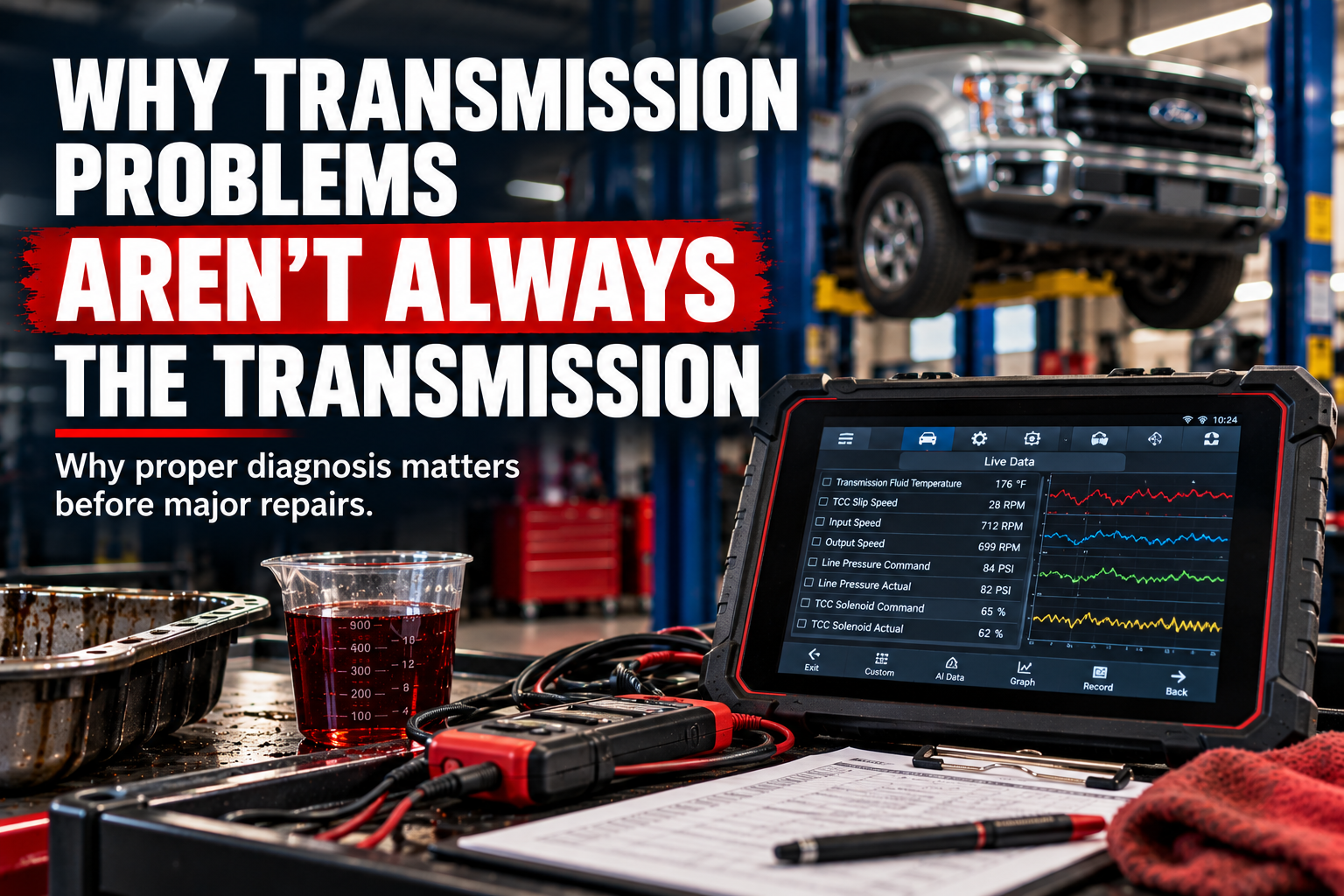
Diagnostic scan tool & testing equipment used to identify the cause of possible transmission problem
By Tex's Auto Care • October 19, 2026
Transmission symptoms don't always mean transmission failure. Learn how proper diagnosis can identify engine, electrical, driveline, or transmission problems.
Transmission fluid pan illustrating whether fluid should be changed in a high-mileage vehicle
By Tex's Auto Care • October 14, 2026
Should you change transmission fluid on a high-mileage vehicle? Learn the facts about old fluid, deposits, slipping, sealed transmissions, and proper service.
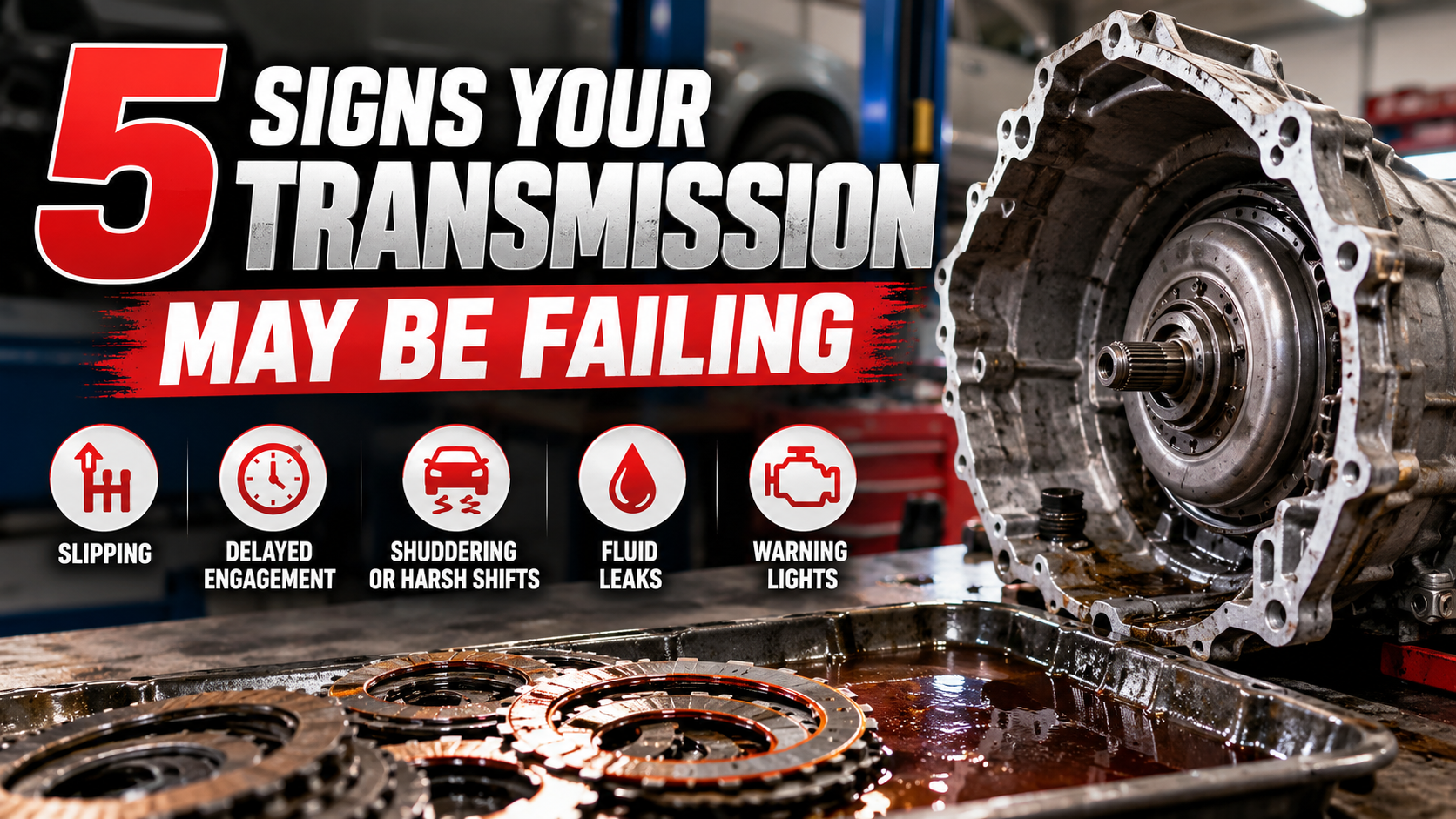
Five warning signs of possible automatic transmission problems
By Tex's Auto Care • October 12, 2026
Learn five common signs of transmission trouble and why proper diagnosis matters before repairs at Tex's Auto Care in Lawrenceburg, Kentucky.
By Tex's Transmissions Complete Auto & Truck Care • September 22, 2026
Brake repair specialists in Lawrenceburg, KY. Trust Tex's Transmissions for expert auto care. Schedule an appointment online today!
By Tex's Transmissions Complete Auto & Truck Care • August 25, 2026
Stay cool with premier A/C services at Tex's Transmissions in Lawrenceburg, KY. Ensure optimal performance. Visit us today!
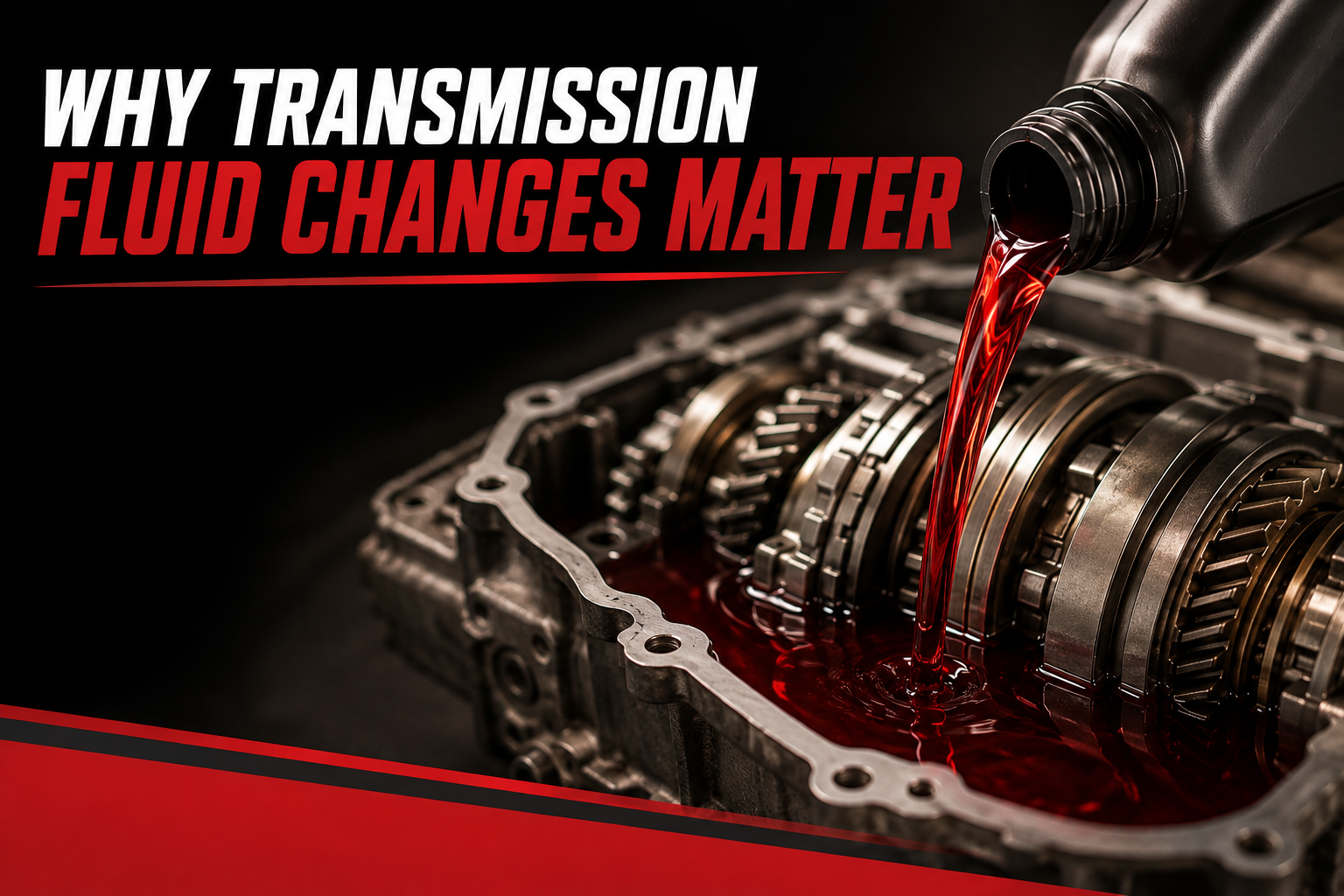
Transmission fluid service helps protect automatic transmission operation
By Tex's Transmissions & More • August 21, 2026
Learn why transmission fluid service matters, what transmission fluid does, and how proper maintenance can help protect your vehicle from costly repairs.
By Tex's Transmissions Complete Auto & Truck Care • July 28, 2026
Enhance your vehicle's performance with our top-notch 4x4 services in Lawrenceburg, KY. Discover our expertise at Tex's Transmissions. Call us today!
More Posts